Trusted, Top-Rated Realtors in Washington, DC
Welcome to our Washington, DC realtors directory – your go-to spot for finding the perfect agent to help you navigate this amazing city's housing market! Whether you're looking to buy your first condo in Dupont Circle or sell that townhouse in Capitol Hill, we've got you covered with local agents who actually know their stuff.
Map of Businesses in Washington
All Listings in Washington
9 businesses
2 Rivers Team @ Compass Real Estate
Real estate agent
4J Real Estate, LLC
Real estate agency
Daryl Judy, Washington Fine Properties, LLC
Real estate agency
Jenn Smira & Co. at Compass Real Estate
Real estate agency
The Foreman Properties Group | Logan Circle | Washington, D.C. | Real Estate
Real estate agent
The Washington Team Realty
Real estate agency
The ONE Street Company
Real estate agency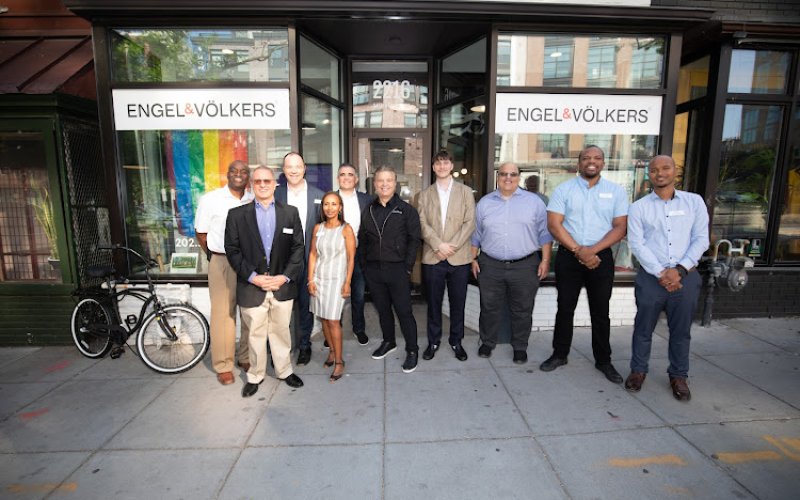
Engel & Völkers Washington DC
Real estate agency
Gordon James Realty
Property management companyAbout Realtors in Washington
Here's something that'll surprise you: DC's real estate market just hit a median home price of $685,000 in late 2024—that's a 12% jump from 2023. And with that surge, the demand for skilled realtors has exploded beyond what most people realize. The numbers tell the story. We've got roughly 4,200 licensed real estate agents operating in the District right now, handling about 18,500 residential transactions annually. That's actually down from the pandemic peak of 22,000 transactions in 2021, but here's the twist—average commission values are up 28% because property values keep climbing. The typical DC realtor is now working deals worth $13,700 in total commission per transaction, compared to $10,800 just three years ago. What makes Washington different? Federal employment stability, for starters. About 23% of our workforce has government jobs, which creates steady housing demand even when other markets wobble. Plus we've got this weird geographic constraint—DC can't sprawl like Atlanta or Phoenix. So when 2,400 new residents move here annually (per Census estimates), they're competing for a finite housing stock. That means realtors here aren't just showing houses—they're navigating bidding wars, coordinating inspection timelines that can make or break deals, and managing clients who often need to close within 30 days for job relocations.
Capitol Hill/Eastern Market
- Area Profile: Historic rowhouses from 1880s-1920s, typical lot sizes 15x100 feet, many with English basements
- Common Realtors Work: Historic property sales, condo conversions, first-time buyer guidance through DC's complex zoning
- Price Range: Median home price $775,000, typical realtor commission $23,250 per transaction
- Local Note: Historic preservation rules can complicate sales—realtors need to understand HPRB approval processes
Shaw/U Street Corridor
- Area Profile: Mix of new condos and renovated Victorians, average unit size 1,200 sq ft
- Common Realtors Work: New construction sales, investor properties, young professional relocations
- Price Range: Condos $450K-$650K, single-family homes $850K+, commissions average $18,500
- Local Note: Metro accessibility drives pricing—properties within 0.3 miles of stations command 15% premium
Dupont Circle
- Area Profile: Embassy district with co-ops, condos in converted mansions, studio to 3BR units
- Common Realtors Work: International buyer services, co-op board navigation, luxury condo sales
- Price Range: Studio condos $400K, 2BR units $750K-$950K, luxury penthouses $2M+
- Local Note: Co-op approval processes can take 45-60 days—realtors must manage extended closing timelines
📊 **Current Commission Structure:**
- Entry-level transactions ($300K-$500K): 2.5-3% total commission split between agents
- Mid-range ($500K-$800K): Standard 6% commission, typically $30K-$48K total
- Luxury ($1M+): Often negotiated down to 5%, but higher dollar amounts mean $50K+ commissions
The market's gotten weird, honestly. Inventory dropped 18% year-over-year through October 2024, but buyer demand stayed strong thanks to federal hiring surges. Average days on market: just 12 days for properties under $700K. That's creating pressure cooker situations where realtors are managing multiple offer scenarios on 60% of their listings. 📈 **Market Trends:** Look, here's what the data really shows—commission compression is real but offset by higher home values. New agents entering the market dropped 23% in 2024 because the barrier to entry feels steeper when average home prices hit $685K. But experienced agents? They're busier than ever. Wait times to get a showing appointment averaged 2.8 days in prime neighborhoods like Logan Circle. Material costs aren't directly impacting realtors, but inspection issues are. With homes averaging 85 years old in core DC neighborhoods, 73% of transactions require some negotiation around foundation, electrical, or plumbing concerns. 💰 **What People Are Spending:**
- First-time buyers: $525K average purchase, typically 10-15% down payment
- Move-up buyers: $750K average, often contingent sales requiring coordination
- Investment properties: $600K average, cash purchases increasing 31% year-over-year
- Luxury segment: $1.2M+ average, international buyers returning post-pandemic
**Economic Indicators:** DC's population actually declined 2.8% since 2020 (now 670,000), but household income jumped 12% to $95,800 median. That's creating this interesting dynamic where fewer people have more buying power. Major employers like Amazon (25,000 employees in Arlington), federal contractors, and biotech firms in the NoMa corridor are driving high-income relocations. The BioHub development near Union Market represents $2.8 billion in investment through 2027. When you see that kind of commercial development, residential follows—and realtors get busy. **Housing Market:** - Median home value: $685,000 (up 12% from 2023) - Year-over-year change: +8.3% price appreciation - New construction permits: 1,847 units approved in 2024 - Inventory levels: 1.2 months of supply (severe shortage) **How This Affects Realtors:** Simple math here. Low inventory + stable high-income demand = competitive markets. Realtors are spending more time on pre-market networking, cultivating seller relationships, and managing buyer expectations. The successful agents I know are getting 40% of their business from repeat clients and referrals because building trust matters when buyers might see only three properties before making an offer.
**Weather Data:**
- ☀️ Summer: Highs 85-90°F, humid subtropical climate, occasional severe thunderstorms
- ❄️ Winter: Lows 35-40°F, average 15 inches snow annually
- 🌧️ Annual rainfall: 42 inches, heaviest May through August
- 💨 Wind/storms: 2-3 severe weather events annually, occasional hurricane remnants
**Impact on Realtors:** Spring market kicks off hard in March—that's when 34% of annual listings hit the market. Summer stays active through August despite the humidity because federal employees often relocate on fiscal year cycles. Winter slowdown is real but shorter than northern markets; January and February see about 60% of peak monthly transaction volume. Weather damage patterns matter for disclosure requirements. Basement flooding during heavy rains affects about 12% of rowhouse properties annually. Realtors need to know flood zone maps and discuss sump pump situations with buyers. **Homeowner Tips:** ✓ Schedule inspections for dry weather when possible—wet basements hide problems ✓ Ask about HVAC age and efficiency—cooling costs can hit $200+ monthly in summer ✓ Check for proper drainage around foundations—DC clay soil causes water issues ✓ Understand snow removal responsibilities for sidewalks (required by law within 8 hours)
**License Verification:** The DC Department of Consumer and Regulatory Affairs handles real estate licensing. Every agent needs an active salesperson or broker license—you can verify this online at DCRA's license verification portal. License numbers start with "SP" for salespersons, "BR" for brokers. **Insurance Requirements:** All licensed agents must carry errors and omissions insurance, minimum $100,000 coverage. Brokerages carry additional coverage, typically $1M+ general liability. Most established firms carry $2M+ policies because DC property values make mistakes expensive. ⚠️ **Red Flags in Washington:**
- Agents claiming they can "guarantee" winning bids in multiple offer situations
- Pressure to waive inspections on properties built before 1978 (lead paint concerns)
- Agents unfamiliar with DC's specific disclosure requirements for condos vs co-ops
- Anyone suggesting you skip attorney review—DC real estate contracts are complex
**Where to Check Complaints:** - DC Department of Consumer and Regulatory Affairs (DCRA) - Better Business Bureau Metro DC chapter - DC Office of the Attorney General consumer protection division
✓ Minimum 3 years active in DC market (not just licensed elsewhere)
✓ Portfolio showing recent sales in your target neighborhoods
✓ References from clients who bought/sold similar properties
✓ Clear communication about market conditions and realistic timelines
✓ Network of local service providers (inspectors, attorneys, contractors)
Cost Calculator
Check Reviews & Ratings
We recommend verifying businesses through trusted review platforms before making a decision.
Frequently Asked Questions
Popular Categories in Washington
Explore Other Cities
Professional Categories in Washington, DC
Related Services from Similar Professionals